
WHEN SCHOOL FEELS IMPOSSIBLE: UNDERSTANDING SCHOOL REFUSAL AND ANXIETY
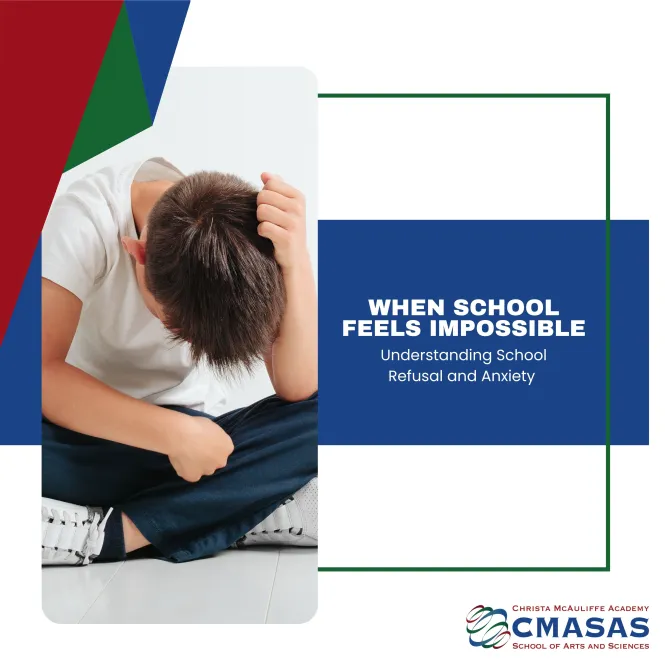
If mornings have become a battle—if your child wakes up with stomachaches, tears, panic, or simply cannot make it through the school doors—you are not alone.
And you're not failing.
For many families, these moments aren't necessarily about defiance or lack of motivation. They can be signs of school anxiety, a very real emotional struggle that can make attending school feel overwhelming.
The good news? With the right support, there is hope.
"The feeling is real, even when the fear is hard to name."
What Is School Refusal?
School refusal occurs when a child's anxiety or emotional distress becomes so intense that attending school feels impossible.
Unlike truancy, children experiencing school refusal typically want to succeed. They want to see their friends. They often wish they could go to school. But the anxiety feels bigger than their ability to cope.
School refusal affects an estimated 2–5% of school-age children, making it far more common than many parents realize.
Signs Your Child May Be Experiencing School Anxiety
School anxiety often shows up physically before children can explain what they're feeling.
Some common signs include:
- Frequent stomachaches, headaches, or nausea before school
- Tearfulness, panic, or emotional meltdowns on school mornings
- Difficulty sleeping before school days
- Repeated requests to visit the nurse or come home early
- Increasing absences, especially after weekends or school breaks
- Clinging, pleading, or refusing to leave home
Every child experiences anxiety differently. Younger children may cry or cling, while older students often withdraw, become quiet, or frequently say they feel sick.
Why Does School Feel So Overwhelming?
School anxiety rarely has a single cause. It is often the result of several factors working together, including:
- Social anxiety or fear of judgment
- Bullying or peer conflict
- Academic pressure or perfectionism
- Sensory overload from busy classrooms and crowded hallways
- Major life transitions
- ADHD, autism, or other neurodivergent learning differences
Understanding why your child is struggling is one of the most important steps toward finding the right support.
How Parents Can Help
You don't have to solve everything at once. Small, thoughtful steps can make a meaningful difference.
Start by:
- Letting your child know you believe them.
- Staying curious about what specifically feels overwhelming.
- Working with your pediatrician, therapist, or school counselor to develop a plan.
- Keeping mornings calm and predictable.
- Celebrating progress—even small victories.
And sometimes, it's worth asking an important question:
Is the learning environment helping my child—or making the anxiety worse?
For some students, the structure of a traditional school becomes one of the biggest sources of stress.
There is Another Path
School refusal doesn't have to define your child's education.
With the right combination of professional support, understanding, and—in some cases—a different learning environment, many students regain their confidence and begin enjoying learning again.
CMASAS is an accredited K–12 online school, not a treatment program. But for many families, a flexible, personalized learning environment removes daily stressors and helps students focus on learning while continuing the mental health support they're already receiving.
In our next article, we'll explore how online learning can help reduce many of the daily triggers associated with school anxiety—and why changing the environment can sometimes change everything.
Explore how CMASAS supports students' mental wellness →
*This post is for general guidance and is not medical advice. If your child is struggling, a qualified mental health professional or your child's doctor is the best first step.